Tuesday, May 31, 2011

PEAKE-A-BOO

As my BBC radio serialisation, The History of Titus Groan continues to be brought to life in Studio 60a of Broadcasting House, I have been reflecting on the pathways of happenstance that led me to Gormenghast.

It was Lewis Carroll who introduced me to Mervyn Peake: my fascination with the Alice books prompted me to start collecting illustrated editions and one of the earliest ones I stumbled across was illustrated by Peake.

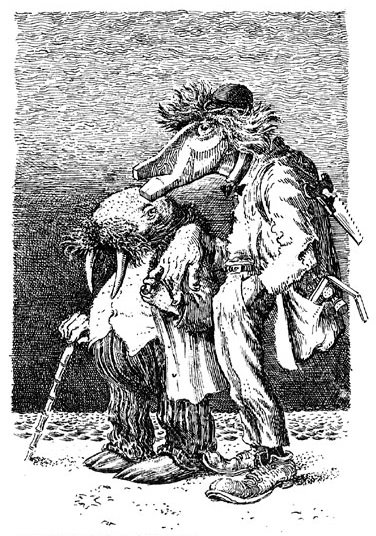
Unlike almost every other artist who had ventured into Wonderland and Looking-glass World, Peake succeeded in throwing off the shackles of John Tenniel and produced pictorial visions for Alice’s adventures that matched the bizarre, often disturbing, text which they accompanied… Who else but Peake would have thought of giving the Carpenter a wood-grained face and, literally, finely chisled features?

Peake’s Alice led me to his illustrated editions of Grimm’s Household Tales and those sea-faring sagas, The Hunting of the Snark, The Ancient Mariner and Treasure Island (below).


My delight in these drawings prompted me – with the impetuosity of youth – to write to the artist’s widow, Maeve Gilmore; and, to my great delight, I was immediately invited to tea at the then Peake home at 1 Drayton Gardens, Kensington.


After tea, Maeve took me into Peake’s workroom, pulled open a drawer and allowed me to browse through folder after folder of her husband's original illustrations.
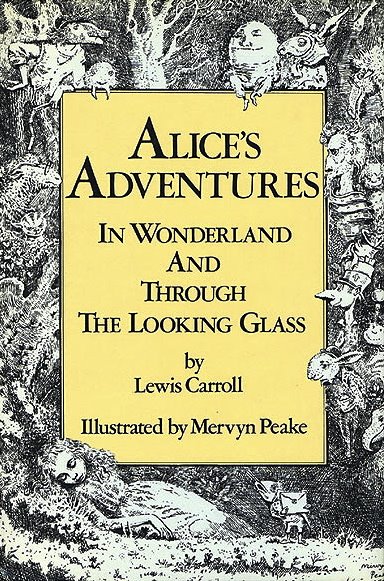
It was while we were looking through the illustrations for Alice that I discovered that several the illustrations, as first published in Stockholm in 1946, differed from those in the 1956 British edition of the book with which I was familiar.

Being at the time, Secretary of the Lewis Carroll Society (and editor of its newsletter, Bandersnatch) this was a fascinating discovery that I was eager to write up. Maeve, sensing my enthusiasm suggested to Peake’s publishers that I be invited to edit what was the first definitive edition (right) of the Carroll-Peake Alice.

This assignment led to more afternoon teas and a deepening friendship with Maeve who – over the Earl Grey – coerced me into joining the Mervyn Peake Society (of which I would eventually become first Secretary and then Chairman) as well as encouraging me to discover Peake the writer as well as the artist.

I went away and read The Rhyme of the Flying Bomb, Shapes and Sounds and Mr Pye and, inevitably, turned my footsteps in the direction of that mournful mountain of masonry – Gormenghast.

Nothing I had ever read prepared me for that world of ruination and ritual; a realm of endless corridors burrowing through a sprawling edifice of broken, ivy-eaten stone; a cloistered universe inhabited by characters hopeless in their complacency, lost in their self-absorption or burning with the fire of ruthless ambition.


When I became Chairman of the Society of Authors’ Broadcasting Committee and had regularly to attend meetings at their offices at 94 Drayton Gardens, I saw Maeve more frequently: having lunch with her in the basement kitchen that she had entirely decorated (down to the Potterton boiler) with murals or enjoying generously measured gins-and-tonic in the back-parlour - or, as she called it, the 'petite salon'.

It was Maeve who encouraged me to offer the BBC a radio dramatisation of Titus Groan and Gormenghast and whilst she didn’t live to hear the Sony Award-winning production with Sting as Steerpike and a star-studded cast, she listened intently as I read her the scripts in the 'petite salon', and – after refreshing my G&T – offered insights and suggestions and generally guided me through the labyrinthine task.

We often talked about how to get more of Mervyn Peake’s work back into print and looked many times through those folders of drawings and paintings filled with so many dazzling examples of her late husband’s stunning draughtsmanship – such as his then unpublished illustrations to Charles Dickens’ Bleak House with such brilliant pieces as the portrait of the icy and imperious Lady Deadlock, illuminated like a player in a Toulouse Lautrec theatre…


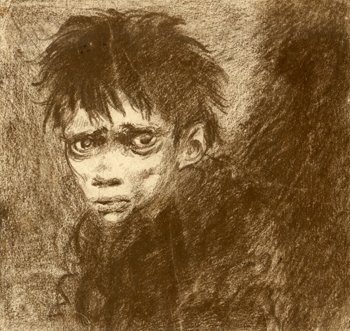
…and the haunting picture of poor, downtrodden Jo the crossing-sweeper with his fear-filled eyes and poverty-pinched features…

Maeve would have been thrilled that so many of those drawings and illustrations were eventually collected in the book, Mervyn Peake: The Man and His Art, compiled by her eldest son, Sebastian Peake, with Alison Eldred and G Peter Winnington.

Published in 2006 by Peter Owen, this volume (more than any earlier collection) is stashed with examples of Peake’s multi-faceted talent: his daringly eclectic range of styles; his fearsome command of every media from the pencil-box and ink-bottle to the paint palette; and his seemingly inexhaustible capacity for perceptive characterisations that capture the comically absurd, the darkly macabre, and the sensually seductive…


I well remember attending the launch of this book at Chris Beetles Fine Art, London, where a selling exhibition of Peake’s work was also on show.

The price-list, naturally, was not reading matter for the faint-hearted or lily-livered, but, as with all such exhibitions, it costs nothing to look and to marvel at the skills of a unique craftsman whose reputation has now deservedly been rediscovered and is rightfully widely celebrated…


However - as is normal in the world of fine art – it is depressing to contemplate the vagaries of fame: remembering that Peake was an artist who, again and again throughout his life, was strapped for cash but who, if he were but alive today, might have expected a healthy cheque from Mr Beetles at the end of the show…

It also occurred to me at the time – looking around at the champagne-drinking chatterers attending the Private View – that, had he been there, Peake would have had his notebook out and been sketching madly…
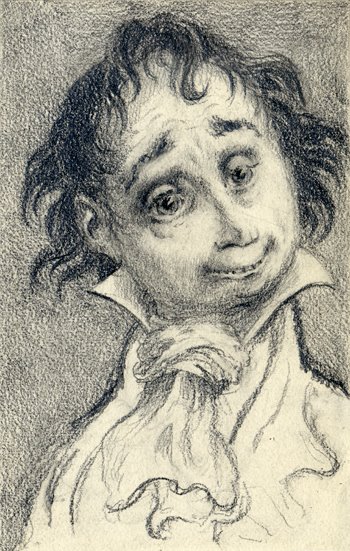

Then I realised that he had already sketched a good few of the attendees and they were there for all to see --- framed and hung!

The room was papered with Peake’s people but it was also thronging with them too, milling around, unwittingly scrutinising their twins and wondering at their beauty, shuddering at their monstrousness, laughing at their ludicrousness…


The likenesses in line had their counterpoints everywhere: that man with the lantern jaw; this one with the parrot-beak nose; the tall woman with no chin and gimlet eyes; the dwarf with the beetling brows and tombstone teeth, the walking cadaver with the hooded eyes...

Was I fantasising?

Perhaps
, I thought, but then, suddenly I noticed – just beyond Jeffrey Archer – the portrait of Mr Chadband from Bleak House being intently scrutinised by none other than Mr Chadband himself!
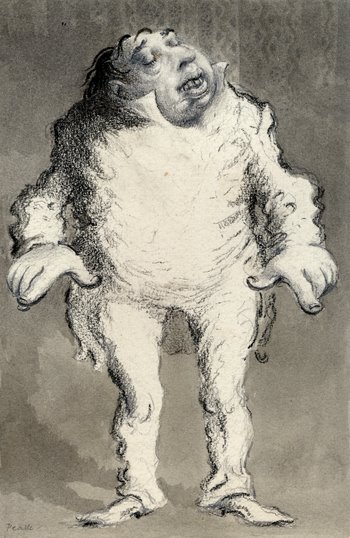

For more information about Mervyn Peake: the man, his art and his writings visit the official Mervyn Peake website.


[All images: © The Mervyn Peake Estate]

Tuesday, May 24, 2011

PRICKLY BEHAVIOUR

John Lahr writing in his biography of Joe Orton, Prick Up Your Ears, quotes a letter written by Orton's lover, Kenneth Halliwell, that was somewhat facetious in tone, whilst being disingenuously signed, 'Yours humbly'.

Lahr says (and I think it's a great quote):

Humility in laughter is as unwelcome as modesty in a prostitute.


Saturday, May 14, 2011

NUTS ABOUT NUTWOOD

Ceaselessly cheerful, tirelessly plucky and endlessly resourceful Rupert Bear is ninety years old and yet as youthful as ever.

Rupert first appeared in November 1920 in a comic strip created by Mary Tourtel for the Daily Express newspaper as part of its bid to win readers from their rivals the Daily Mail which featured a popular strip about Teddy Tail.

In 1935, when Mary Tourtel retired, the task of drawing Rupert - and writing his adventures - fell to illustrator and Punch artist, Alfred Bestall.


The following year Bestall produced the evocative art for The New Adventures of Rupert - the very first Rupert Annual…


Out of respect to the Rupert’s creator, Bestall - a modest, self-effacing man - didn’t sign his artwork until after Mary Tourtel’s death in 1948.

Alfred Bestall wrote and illustrated a staggering 273 Rupert stories (mostly for the daily newspaper publication but with others produced specially for the annuals) until his own retirement in 1965.

I only ever saw the newspaper strip when I visited my paternal grandparents, but I was given several Rupert annuals over the years, this being the first...


Heaven only knows where it is now!

What I really loved about Rupert was the format of the albums: the running headings that were a synopsis of each story with little figures in the top corner of each page; the four-frame picture-story, the rhyming couplets that told the story under each picture in not-very-sophisticated doggerel and then the prose telling of the tale that appeared at the bottom of the page just as it did under the panels in the newspaper.


Then there were the activities-pages with puzzles, origami models (which I never successfully made) and, in later numbers, magic painting pages.

And, for me, the highlight of ever annual: Bestall’s wonderful full-colour wrap-around cover plus those enchanting endpapers showing the coutryside around Nutwood and other wonderful landscapes - sometimes seascapes - that combined the real and fanciful into a dreamworld that still haunt the memory…

Then, of course there were the stories - packed with wild escapades, amazing expeditions curious inventions and extraordinary characters that secure these little narratives a place among the most inventive writing for children in the twentieth century.

There were mysteries, too, such as why it was that inside the books Rupert had a white face, hands and boots but on the cover was a brown bear in brown boots!

The one exception (right) was the 1973 annual where someone at the Daily Express impudently altered Alfred Bestall’s artwork for the cover in order to match the interior!

The dozen or so proof copies with a brown-faced Rupert (below) are greatly sought-after and hysterically valuable! In fact, it might just be worth checking your attics!


Another mystery, of course, was the way in which clothed animals and human beings - not to mention giants, wizards, dragons, unicorns, mermaids, goblins, pixies and living toys - cohabited in a fantastical universe.

Former Python (and Rupert-fan) Terry Jones once pointed out how Rupert encounters a talking cat, , in one story, and is utterly astonished by the fact as though he were not, himself a talking bear!

But then, in a way, Rupert isn’t really a bear he is a boy - a young child - you and I, the reader - wearing a bear-faced mask!


Equally curious was the fact that the human characters wear a wide range of costuming: medieval doublets and hose, Georgian knee-breeches and buckle shoes, Victorian skirts and bonnets, ‘twenties plus-fours and brogues and forties three-piece suits.

The last Rupert annual cover Alfred Bestall ever painted was that one on which Rupert turned white, but other artists carried on the work including Alex Cubie, John Harrold and Stuart Trotter who currently has care of the bear and who is, as can be seen from last year's 75th annual (below), a worthy inheritor of the Rupert legacy.


Thanks to everyone who keeps Rupert on the track of new adventures along with his chums - Bill Badger, Algy Pug, Podgy Pig, Willy Mouse, Pong Ping the Pekingese and Edward Trunk...
"Goodness," said Rupert, "it's been such fun,
Ninety years and I've just begun!"

To learn more about Rupert's world, his creators and the annuals, visit The Followers of Rupert

And if you're in the market for some old Rupert Annuals, visit The Official Classic Rupert Bear Mail Order Shop


A version of this post first appeared on Brian Sibley: his blog

Saturday, April 23, 2011

PEAKE DISTRICT

I am currently working on a series of radio plays for BBC Radio 4's 'Classic Serial' based on the Titus Groan novels of Mervyn Peake.

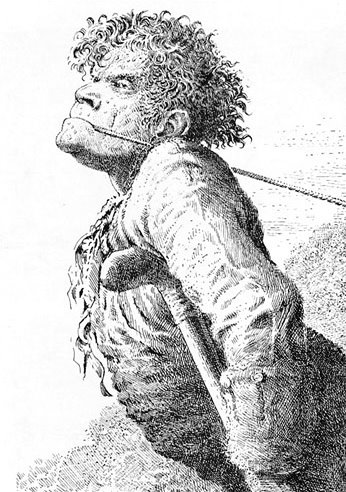
Re-reading Peake's fantastical prose, I came across a wonderful phrase which I had totally forgotten describing of the manner in which the gargantuan chef, Swelter (right), addresses the terrorised kitchen urchins who work for him.

The author, writes of Swelter leaning forward, "dropping each confidential word like a cannon ball smeared with syrup."

Brilliant!


This post first appeared on Brian Sibley: his blog

Sunday, April 11, 2010

CELEBRATING SEARLE

Originally posted on the Sibleyblog on 3 March, 2010, the 90th birthday of the greatest cartoonist of the late 20th century.

Click image to enlarge

RONALD SEARLE is universally remembered for his infamously anarchic educational establishment, St Trinian's, whose young ladies were later immortalised on film under the tutelage of Miss Milicent Fritton (first portrayed by Alastair Sim and, more recently, by Rupert Everett) and who are here seen, in one of the original drawings, turning out to greet an honoured guest on Founder's Day - could it be the artist himself? I think so...

Click image to enlarge

I first encountered Searle not on the hockey-pitch of St Trinian's but through his illustrations to the fairytale worlds of James Thurber's The 13 Clocks and the Wonderful O...


Shortly afterwards, I became acquainted with (right) Searle's graphic contribution to the academic misadventures of Master Nigel Molesworth who - "as any fule kno" - was the Curse of St Custard's.

Despite the fact that Searle's collaborator was a former teacher, Geoffrey Willans, Down with Skool, How to Be Topp and their companion volumes were widely condemned by educationalists in my day (and certainly banned from my skool library) due to their appalling spelling and grammar and, more heinously, their highly subversive content!

Today, changing social mores not withstanding, they remain an hilarious insight into the monstrous minds of small boys!

"The Molesworth-Peason lines Machine.
Runs off a hundred in one minit. (patnt pnding.)"
Click image to enlarge

During my own passage from adolescence to adulthood, I discovered Searle's many collections of cartoons and pen portraits as well as some of his illustrations to an astonishing range of books by authors ranging from Charles Dickens via Christopher Fry to Patrick Campbell.

Searle, I found, had also decorated the lyrics of Tom Lehrer, Flanders and Swann and, in the animated film, Dick Deadeye, the stories and characters of Gilbert and Sullivan.

I also stumbled across (left) his spidery 'embellishments' to a delicious oddity, The Journal of Edwin Carp, written by the actor Richard Haydn (fondly recalled as Max Dettweiler in The Sound of Music) which inspired this short animated film...


Ronald Searle was an artist of enormous diversity, whose work spans over sixty years of contributions to Lilliput, Punch, Life, Holiday, La Monde and many other publications containing his idiosyncratic observations on life in Britain...

Click image to enlarge

France, where he eventually made his home...

Click image to enlarge

And the USA...

Click image to enlarge

Searle's established brilliance as a caricaturist, led to his designing several memorable movie posters and title sequences for a number of films including Scrooge, Monte Carlo or Bust and Those Magnificent Men in their Flying Machines...

Click image to enlarge

During WWII, Searle had undergone the harrowing experience of being a Japanese POW in Changi Gaol and having witnessed torture and death at such close range may well have contributed, obliquely, to the comic violence found in the corridors, dorms and labs of St Trinian's and St Custard's. They certainly seem to haunt many of his later, darker cartoons, but the humour always bubbles through especially in his much-loved universe of bizarre birds, preposterous pigs and corpulent, contented cats...

Click image to enlarge

The work of this brilliant artist is currently being celebrated in two major London exhibitions:

Ronald Searle - Graphic Master is on show from 3 March-4 July at The Cartoon Museum, 35 Little Russell Street, London, WC1A 2HH. Opening hours: Tuesday-Saturday, 10:30-17:30; Sunday, 12:00-17:30, Closed Monday.

This glorious exhibition celebrates the creator of Molesworth and Co and the 'Surly gurls' of St Trinian's with some memorable scholaric moments such as this one...

"Ruddy Sports Day!"

The exhibition places Searle's cartoons, caricatures and illustrations within the historical context of graphic art as represented by such predecessors as Gilray, Cruikshank and Rowlandson. It also expands our appreciation of Searle's brilliance as a master of graphic reportage as demonstrated in a wide range of works from scenes of London life (sewer-men, flag-makers, boxers, and auctioneers) made during the 1950s for the News Chronicle and which are an evocative insight into London life in the early days of the 'New Elizabethan Age', through to Searle's globe-trotting observations of other cultures, by turn, brutally harsh and wryly affectionate.

Among the exhibits (many borrowed from the artist and his family and several of them unpublished and seen here for the first time) are plenty of pictures that make you smile, chortle and laugh out loud at the follies and absurdities of human nature, as well as others that will evoke quite different emotions such as Searle's painful and horrific war-time sketches of disease and death in the Burmese jungle and his clinical post-war chronicling of the trial of Adolf Eichmann and an emotional response to the erection of Berlin Wall.

A fabulous, full-colour 160 page catalogue (right) contains - in addition to a superabundance of Searleiness - essays and art-pieces by Steve Bell, Roger Law, Uli Meyer, Arnold Roth, Martin Rowson, Gerald Scarfe, Posy Simmonds and Ralph Steadman. At £14.99 it is a 'snip'.

If you love Ronald Searle - or even if just quite like him - you must not miss this exhibition!

The Cartoon Museum, 35 Little Russell Street, London, WC1A 2HH.
Opening hours: Tuesday-Saturday, 10:30-17:30; Sunday, 12:00-17:30, Closed Monday.

'Palm Springs' from The Cartoon Museum exhibition

There is also a largely-selling exhibition, Happy 90th Birthday Ronald Searle, from 3 March - 3 April at Chris Beetles Gallery.

Among the exhibits that are on loan (rather than for sale) in the Beetles show - which traces Searle's draughtsmanship from Lilliput to his illustrations, a year or two back, for Jeffrey Archer's Cat O'Nine Tales - is our very own Searle original: a classic St Trinian's cartoon showing the long-suffering headmistress and one of the little devils in her charge...

Click image to enlarge

On a blog post of a few years back, you can read more about this picture and about some of Searle's other work.

Chris Beetles Gallery, 8 & 10 Ryder Street, St James's, London, SW1Y 6QB.
Opening hours: 10:00-17:30pm Monday-Saturday. Closed Sunday.


And, after all that, all that remains to be said is....

Many Happy Returns, Mr Searle!


Several of the illustrations in this post have been 'borrowed' from my good friend, artist and animator, Matt Jones' blogs: Perpetua - Ronald Searle Tribute and Ronald Searle Tumblog, which are the places to go to read and see more - a lot more - about the work of this incomparable artist.

And check out Matt's other blogs:
Matt Jones' Sketchbook
Matt's Morgue
Mis-en-scene and others.

Incidentally, Matt will be giving a talk about Searle's work with animation at the Cartoon Museum on Tuesday 30th March. A month later (more or less) on Wednesday 28 April, I will be speaking about Searle's illustrations. There will be a number of other talks during the run of the exhibition and I'll give details as soon as they are available. All talks will begin at 6:30.

Saturday, December 20, 2008

A DICKENS OF A TALE

This seasonal post is reprinted from the Sibleyblog, 13 December 2006...

It's got apparitions, transformations and all manner of scenes from the frenzied delights of a Christmas ball to ghostly goings-on in a graveyard.

A Christmas Carol might almost have been written for the stage and it certainly has been on the stage at sometime or other for pretty much every one of its 163 years.

Take this Christmas [2006], for example: there will be revivals of Leslie Bricusse’s all-singing version and Christopher Gable’s all-dancing production; with famous former-Fagin, Ron Moody taking on a new Dickensian persona in Swansea as Ebenezer Scrooge and Michael Barrymore (above) reprising his portrayal of the role on tour.

It was in December 1843, that Dickens - angered by the terrible poverty of his day - published this little 'ghost story of Christmas', recounting the reformation of a mean-spirited man for whom December 25th and all associated with it is nothing more than "HUMBUG!" Though scarcely more than a novella, Dicken's Carol is crammed with memorable characterisations - living and spectral - and a series of rich descriptions of Christmas traditions and celebrations.


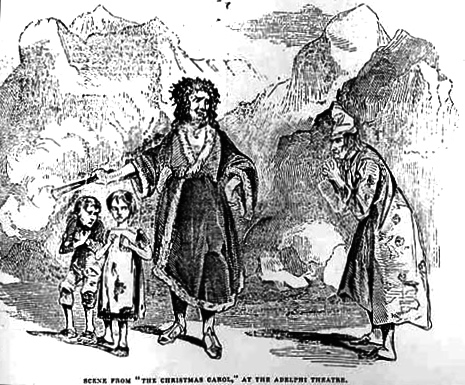
Within two months, there were no less than eight dramatised versions of A Christmas Carol being simultaneously presented on the London stage.

In order to avoid confusion, the titles were different - but only just! One was called A Christmas Carol, or the Miser's Warning; another A Christmas Carol, or Past, Present, and Future; a third A Christmas Carol, or Scrooge the Miser's Dream, or, The Past, Present, and Future...


One of the first performers to portray Scrooge was the celebrated Victorian actor, O. Smith, whose performance was described by Dickens as “drearily better than I expected”, adding that he found it “a great comfort to have this kind of meat underdone” - something which cannot be said of all his successors!

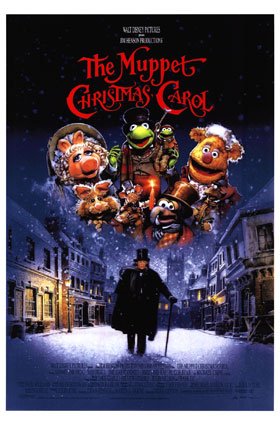
2006’s Scrooge’s - whether professional or amatuer - are the latest in a long line of performers to play the “squeezing, wrenching, grasping, scraping, clutching, covetous old sinner” and distinguished humbugs have included veteran thespians Bransby Williams and Seymour Hicks who both began by playing the part in legitimate theatrical productions before transforming their performances into solo music hall turns and then ending up among the first screen Scrooges - succeeded by the likes of Alistair Sim (for many the greatest of Scrooges), Albert Finney, George C Scott and Michael Caine in the much-loved musical version The Muppet Christmas Carol.


There has been an Ebenezer Scrooge for every possible taste from Anthony Newley to Anton Rodgers; from the senior partner of Steptoe and Son, Wilfred Brambell, to Star Trek's Jean-Luc Picard, Patrick Stewart (right); and employing every conceivable medium from a mime performed by Marcel Marceau to an opera sung by Sir Geriant Evans.

'Scrooging' has long been a popular pastime among knights of the theatre: Laurence Olivier, Ralph Richardson and Alec Guinness all did it on radio, Michael Hordern did it on television and John Gielgud on record. Others who have read the story on disc, tape and CD include Geoffrey Palmer, Richard Wilson, Ronald Coleman, Vincent Price and Leonard Rossiter.

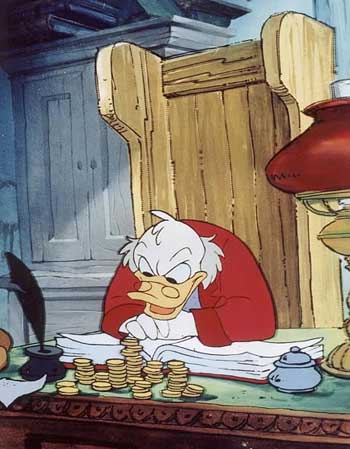
In America, where A Christmas Carol is equally - perhaps even more - beloved, Dickens' stony-hearted skinflint was portrayed or radio, for many years, by Lionel Barrymore and Orson Welles and on other occasions and in a variety of media by Basil Rathbone, Frederick March, Walter Matthau, Kelsey Grammer, Mr Magoo and Donald Duck's penny-pinching uncle, Scrooge McDuck!


From the outset, dramatists have tinkered with the original text: from small embellishments such as giving Scrooge's nephew, Fred, the surname 'Freeheart', to the invention of a sinister character called 'Dark Sam' who added to the Cratchit family's problems by stealing Bob's scant wages. One particularly free dramatization, Old Scrooge, staged in 1877, ended by reuniting the reformed miser with his lost love, Belle, who conveniently turns out to be Fred's wife's widowed mother!

Some of the more bizarre curiosities - Vanessa Williams as self-centered pop-star, Ebony Scrooge; Jack Palance as Ebenezer, a Western card-cheat and gunfighter; or Bill Murray as Frank Cross, the cynical TV executive who gets Scrooged - serve to indicate the extent to which Dickens' story has become part of popular mythology, a folk tale or fairy story which is perennially retold and reworked in the telling.


So well do we know - and love - Dickens' story that it's characters have had several sequels written about them with several amusing speculations on what might have happened if Ebenezer Scrooge had subsequently relented of his Christmas conversion and had gone back to his old miserly ways and some alarming accounts of how the angelic Tiny Tim might have turned out not so virtuous when he grew up and inherited Scrooge's business! Why, there is even a Jewish spoof on the story entitled Hanukkah, Schmanukkah!

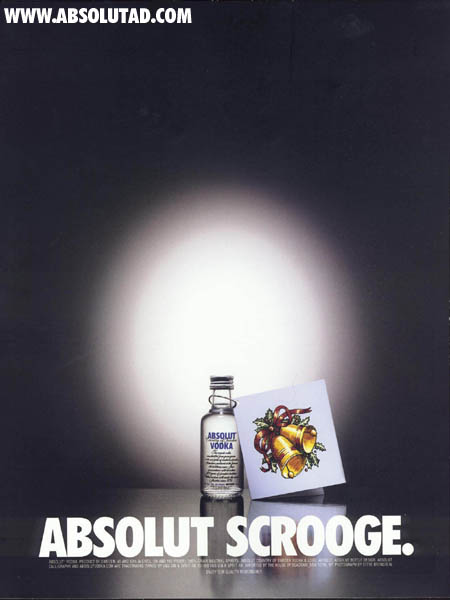
Dickens' characters have been employed by several generations of political cartoonists from Punch's John Tenniel, who depicted Prime Minister William Gladstone as Scrooge, to Gerald Scarfe who drew the Ghost of Margaret Thatcher haunting a terrified John Major. They have also found their way into various advertising campaigns for, among other products, Hamlet cigars, Heineken lager and Absolut vodka.


In fact, so well known is A Christmas Carol that even people who have never read it, actually believe they have! Say the word “Humbug!” and someone will think of Ebenezer Scrooge; utter the phrase: “God bless us, every one!” and people at once recall the words of Tiny Tim.

Small wonder that William Makepeace Thackeray, reviewing the book in 1843, wrote: “It seems to me a national benefit, and to every man and woman who reads it a personal kindness.”

One hundred and sixty-three years on, there seems no reason to quibble with that verdict.

Signed Books: 2 – JOURNEY'S END

Among my collection of signed books are volumes given to me by writers who were also friends along with others by writers, actors and celebr...